The prettiest roof on your feed might be a lawsuit waiting to happen
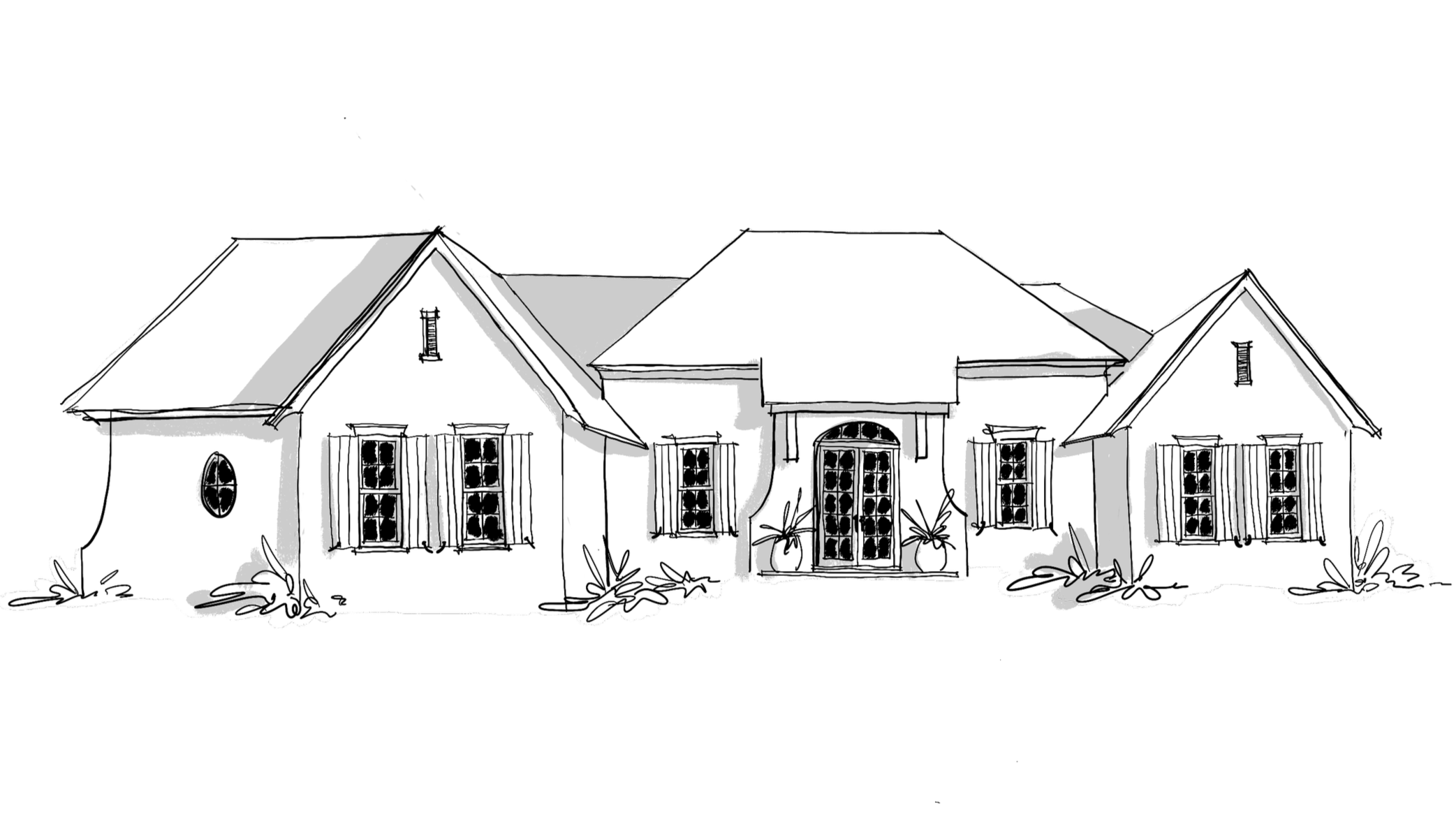
A quick note before we start. I am not here to throw anyone’s real project under the bus, so every example you will see in this post is my own sketch. But fair warning, once you learn to see this, you will start seeing it everywhere.
Like probably everyone else, I was doing the one thing we all know we shouldn’t the moment we wake up, lying in bed scrolling, when a post of a beautiful new home stopped me cold. The comments were full of people swooning over the roof. I kept staring too, but not because it was pretty. The way all those roof planes folded into each other felt wrong, and I couldn’t shake the thought: why would an architect design that, or am I the crazy one here?
So at five in the morning, a little obsessed, I texted a friend who has run a roofing company for years and asked him point blank, isn’t this a water issue waiting to happen? His reply was immediate and blunt. Function has to come before making a mark, he said, and a roof that channels all its water and weight down onto one concentrated spot, what builders call a point load, is a recipe for disaster. Then he went on, in the best way, about how many lawsuits he has personally been pulled into over exactly this kind of roof, because in the end it almost always comes down to water getting in where it never should.
That is the thing I want you to carry with you, especially if you are early in this and still falling in love with how a home looks. A roof is a styling choice, of course it is, it shapes the whole character of a home. But like every choice in building design, it has to meet its functional purpose first and deliver on beauty second, never the other way around. Because a roof is the one thing standing between your client and the weather, and when it fails, it does not fail quietly. It shows up as water stains spreading across a ceiling, as rot in the framing, as mold, as a very expensive phone call with your name attached to it.
Every internal valley is a ticking time bomb
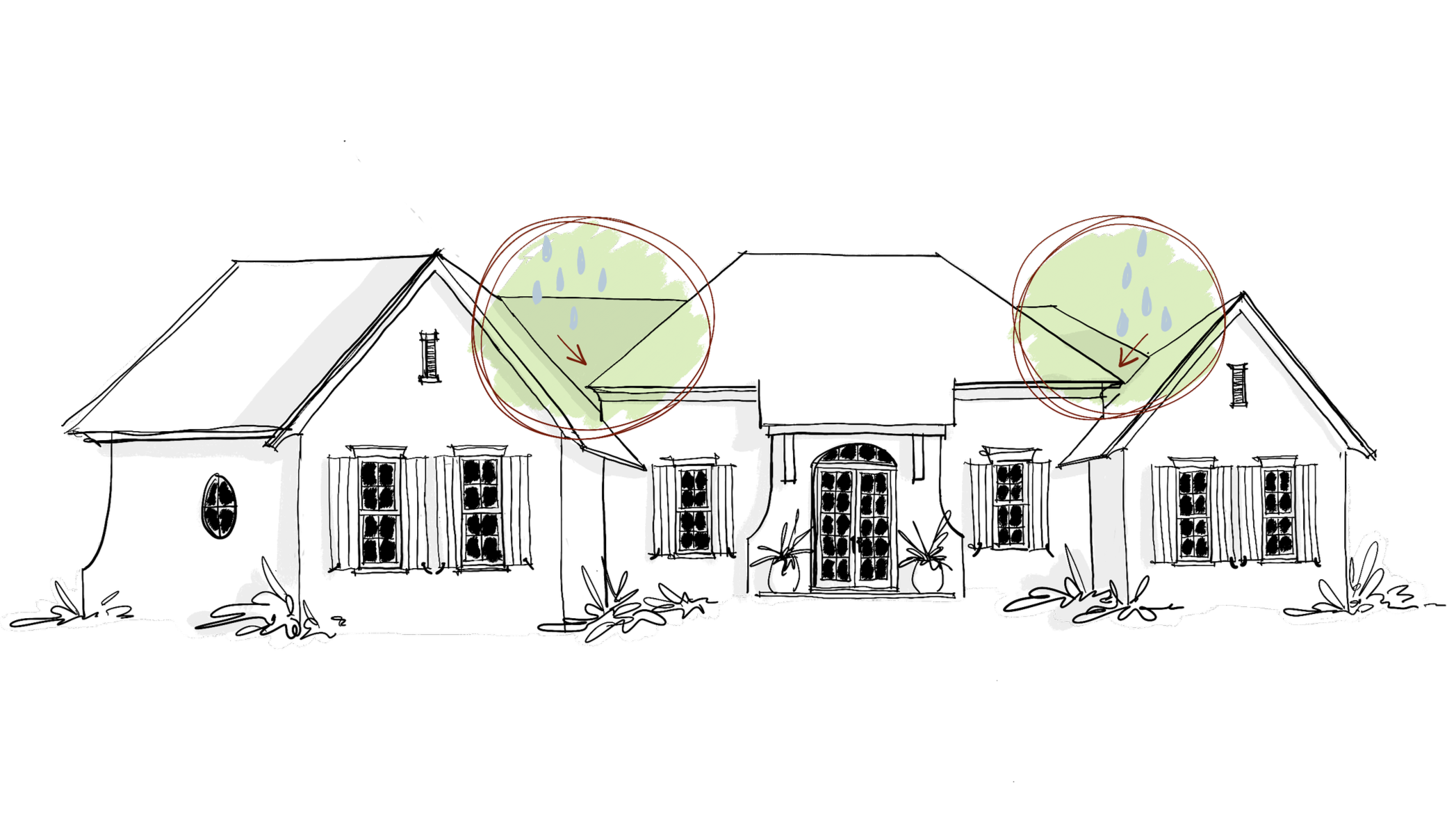
Let me give you the one piece of vocabulary that will change how you look at every roof from now on. A valley is the line where two roof planes slope down toward each other and meet, like the inside crease of an open book. Water from both slopes runs straight into that crease, so a valley is really a channel that collects water and funnels all of it to one point. The classic version of this is two gables, the triangular wall ends you picture when you imagine a simple house roof, sitting side by side and running parallel, with a valley trapped in the channel between them. Add some leaves, a little ice, or one slightly imperfect piece of flashing, the metal that is supposed to seal that seam, and that channel is exactly where water finds its way in.
A few valleys, detailed on purpose, are completely fine. Every good roof has some. But pile a bunch of them onto one home for the sake of drama, all dumping into each other, and you have quietly built a machine for trapping water, the kind of thing that comes back on you years later, long after everyone has forgotten it was ever a design choice.
You shouldn’t try to flash your way out of a bad roof
When a designer spots a messy connection, the first instinct is usually to reach for better flashing or a fancier gutter. But you can detail every connection perfectly, and 99 percent of the time it will not actually be perfect once it is built, and even when it is, materials expand and contract with heat and cold over the years until those seams work themselves loose. Flashing and gutters are patches. They are not a fix.
And please, do not leave the roof for your contractor to figure out on site. That is not their job, and the moment you hand off a roof you could not resolve yourself, you look like an amateur to the very person whose trust keeps you getting hired. The real fix is never a cleverer detail bolted onto a bad shape. It is a calmer shape you worked out on purpose, before a single thing gets built. Beautiful is the easy part. Almost anyone with taste can draw a striking roofline. The designers people truly trust are the ones whose roofs are beautiful and quietly boring in all the right places, still doing their job in thirty years.
You can fix it without giving up the look
Here is the part most people miss, and it is the part that should let you exhale. You almost never have to choose between a roof that works and a home that is beautiful. Nine times out of ten, that troublesome extra gable has no real reason to be there in the first place. Take it out, echo a shape that is already working somewhere else on the house, and the design still sings while the water problem simply disappears. The question I ask myself on every project is this: if we go in this direction, we are probably going to have issues, so how do we keep the same feeling without creating them? That one question will save you more grief than any detail ever could.
Solve the roof before you develop the design
This next habit changed everything for me, so I am handing it straight to you.
Before I commit to any conceptual direction, I usually find myself building the entire home as a rough massing, sometimes in a 3D program like ArchiCAD and sometimes just as a sketch. And I mean rough. The one I built for this house is completely hacked together, you could never make a real drawing set from it, and that is not the point. The point is that it lets me get every roofline figured out while my mistakes are still free to fix.
While you are in there, two things will save you. First, let your roofing material set your slope, which is simply how steep the roof is, rather than picking a steepness by eye, because every roofing material has a minimum slope it is rated for and you do not get to argue with it. Second, break up your massing. Massing is just the big shapes a home is made of, the main volumes before any of the detail goes on. When a home is one giant block, you are forcing several large roof planes to crash into each other, and that is where the valleys multiply. Push and pull the form into two or three clear volumes connected by smaller, simpler roofs, and the whole thing calms down. Good massing and a good roof really are the same conversation, not two separate ones.
Water always finds the path you forgot
The last habit is the simplest, and it is the one that keeps you from getting the call two years later about water coming through a ceiling you designed. On every design, follow the water in your head all the way down, and then ask where it goes after that.
Design for the worst case, always. Slope the roof so it sheds water cleanly, never back toward the house, and picture what happens in the heaviest storm or the deepest freeze your client will ever face. And when you genuinely do not know how to handle something, do not guess. Find a real home that clearly solved the same problem and study how it was actually built. That one instinct, always chasing the water to the ground, is what protects your clients and your name for an entire career.
Where to go next
If your takeaway here is a little healthy fear, good, hold onto it, because respect for water is exactly what makes a designer someone people trust with their home. But do not let it stop you. Every principle here is learnable, and you just learned the most important ones. Start noticing rooflines everywhere you go, keep asking where the water goes, and build your homes in rough 3D so your roofs are solved long before anyone drafts them.
If you are still mapping out how to build this skill and this career, I lay out the whole path in how to become a residential designer, and if you are wondering whether you even need a degree or a license to design homes like this, I answer that honestly in do you need a degree to be a residential designer.
Frequently asked questions
How do I fix a roof plan that is full of valleys?
This came up with one of my students whose plan had valleys colliding all over it. The usual fixes are to lengthen a ridge by bumping up its pitch, to pull a hip all the way through so the smaller roof dies cleanly into the main one, and sometimes to turn a gable into a hip. Work it in a rough 3D model first, because these moves are almost impossible to judge on a flat plan.
Should I use internal roof drains?
Where water can freeze, I avoid them. A student in a snowy climate and I talked this through, and my rule is to design for the worst case, because water sitting in an internal drain, freezing, and expanding is exactly how it gets in. I would rather slope the roof honestly and let it shed, and for anything unusual, study real permit drawings from a comparable home.
What roof slope works for a Mediterranean style home?
Mediterranean homes usually wear a lower slope, often something like a 5 in 12, with a foot or two between the top of the windows and where the roof starts, which is a big part of what gives them their proportion. One thing to watch is that barrel tile is not really meant for very low slopes, even though you will see it done, so let your roofing material guide how low you can actually go.
Which direction should a roof slope?
Across the shorter dimension of a roof plane rather than the long one. Running the slope the short way needs less total rise to move the same water, so the pitch stays subtle instead of building into a big, obvious tilt. And in cold climates, I avoid internal roof drains wherever I can, because water sitting in a drain, freezing, and expanding is one of the most reliable ways to get a leak.
Rafi Inez is a residential home designer based in Miami. She runs her own design firm and founded the Home Design Academy, an intensive 16-week residential design program. She holds two architecture degrees and is completing her architecture licensure. Raised on Florida’s 30A among the new urbanist communities of Seaside and Alys Beach, she built an audience of 100,000+ by sharing real projects, and teaches designers to create homes with a genuine sense of place.